

At our school, we take a thoughtful approach to homework. Research from the Education Endowment Foundation shows that homework in primary school has limited impact on children’s overall progress. Instead, we place our focus on what truly makes a difference — regular reading at home.
Here are some easy ways that parents or guardians can help children become strong, successful readers:
Build reading into your child’s routine
Choose a regular time each day when your child has the most energy — after school, after tea or in the morning.
Read every day
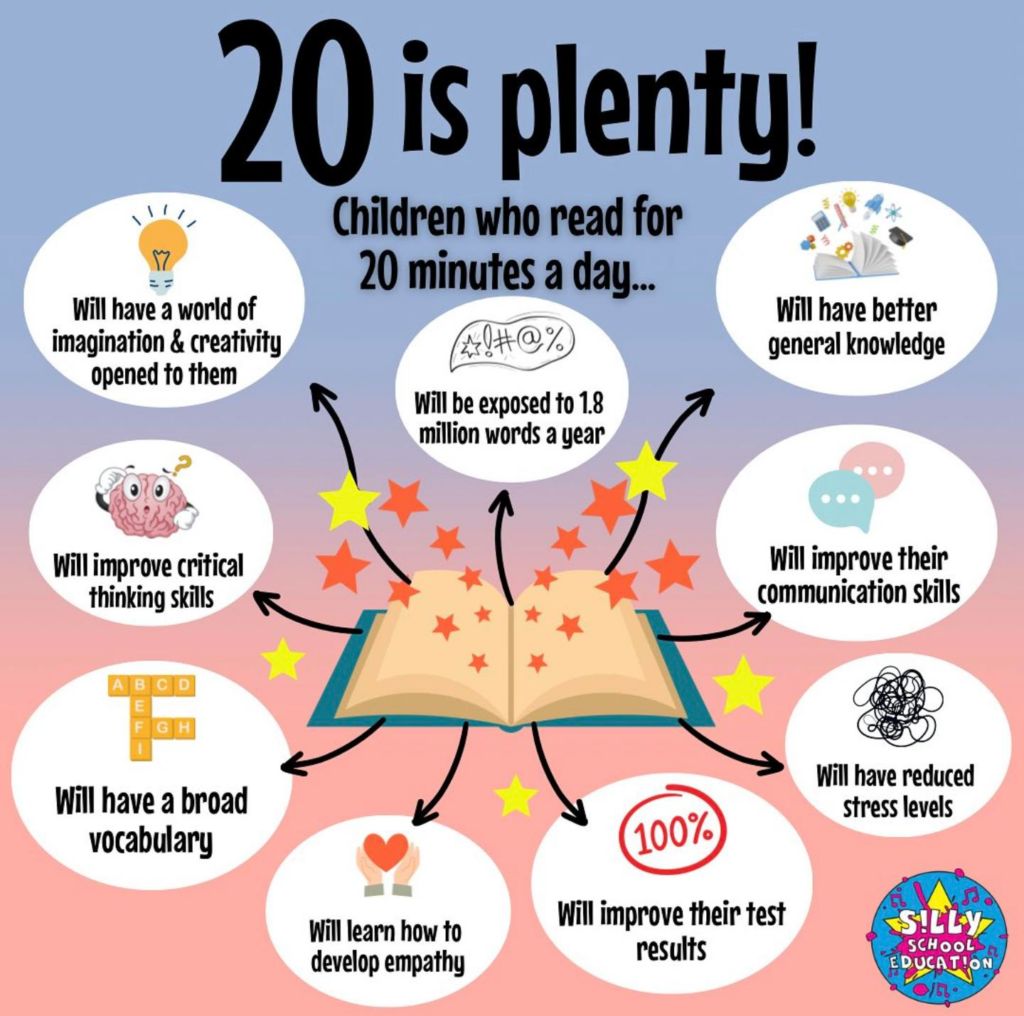
Even 10–20 minutes of daily reading helps children become more confident and fluent readers.
Create a cosy reading space
A quiet, comfortable spot helps children focus and enjoy reading time.
Follow your child’s interests
Let them choose books they enjoy — it keeps reading fun and motivating.
Be a supportive reading partner
Be patient, praise effort, talk about the story and gently help with tricky words.
Have books around the home
Easy access to books helps children see reading as a normal, enjoyable part of life.
Take books on the go
Keep a book in your bag or car for quick reading opportunities.
Be a reading role model
Let your child see you reading — children copy what they see.
Stay positive and enthusiastic
Celebrate progress and make reading a happy experience.
Take breaks if needed
Short, regular reading sessions are just as valuable as longer ones.
Use technology wisely
E-books, audiobooks and storytelling apps can support reading when used together with an adult.
👉 For more tips, visit BookTrust: https://www.booktrust.org.uk/books-and-reading/tips-and-advice/
Each week, children also receive spellings to practise. Each of our children have been given a book bag and a reading record for you to record reading at home.
Our priority is that children work hard and engage deeply in their learning at school, while enjoying quality time at home with their families. Activities such as cooking together, playing board games, visiting the park, or discussing the day’s events can be far more beneficial — helping children develop language, curiosity, and a love of learning that lasts a lifetime.
